
Hipparcos Catalog
Hipparcos Catalog - Launched in august 1989, hipparcos successfully observed the celestial sphere for 3.5 years before operations ceased in march 1993. It can be searched and plotted by ship and skymap programs,. It successfully monitored the celestial sphere for 3.5 years before it stopped operating in march 1993. The hipparcos catalogue, which contains 118,218 stars with the maximum level of precision documented, was created using calculations from observations. Enter a specific hipparcos (or hd) or tycho catalogue identifer to retrieve data with field descriptions plus access to light curves, double and multiple systems annex and variability. The satellite, which operated for four years, returned high. The entire scientific programme of the hipparcos mission (including the satellite's sky scanning and its attitude determination) was based upon the 'hipparcos input catalogue', the. The most accurate and comprehensive stellar catalogues ever produced, the hipparcos and tycho catalogues, were published in june 1997. Hipparchus is referenced in the name and acronym of the european space agency' scientific satellite hipparcos (for high precision parallax collecting satellite). The hipparcos catalog contains 118218 stars with parallax, proper motion, and photometry data from the hipparcos satellite. Showing objects 1 to 100 of 9105. The satellite, which operated for four years,. The satellite, which operated for four years, returned high. Median astrometric standard errors (in. The hipparcos catalog contains 118218 stars with parallax, proper motion, and photometry data from the hipparcos satellite. The esa star mapper visualisation is an exploration of some. The principal observational characteristics of the hipparcos catalogue, and a summary of its main astrometric and photometric properties, are presented. Check our common star name table or the simbad source name resolver. Hipparchus is referenced in the name and acronym of the european space agency' scientific satellite hipparcos (for high precision parallax collecting satellite). It is often combined with. The satellite, which operated for four years,. It successfully monitored the celestial sphere for 3.5 years before it stopped operating in march 1993. The entire scientific programme of the hipparcos mission (including the satellite's sky scanning and its attitude determination) was based upon the 'hipparcos input catalogue', the. Showing objects 1 to 100 of 9105. The hipparcos input catalogue was. It successfully monitored the celestial sphere for 3.5 years before it stopped operating in march 1993. The hipparcos input catalogue was constructed as the observing program for the european. • the provision of an accurate reference frame: The principal observational characteristics of the hipparcos catalogue, and a summary of its main astrometric and photometric properties, are presented. The hipparcos catalog. The hipparcos and tycho catalogues are the primary products of the european space agency's astrometric mission, hipparcos. The satellite, which operated for four years,. Check our common star name table or the simbad source name resolver. If you don't know the hip number for you favorite star, check out the simbad source name resolver. The hipparcos input catalogue was constructed. The hipparcos input catalogue was constructed as the observing program for the european. The hipparcos input catalogue was constructed as the observing program for the european. It contains over 100,000 stars down to magnitude 13, which is good enough for a lot of work. If you don't know the hip number for you favorite star, check out the simbad source. It successfully monitored the celestial sphere for 3.5 years before it stopped operating in march 1993. The most accurate and comprehensive stellar catalogues ever produced, the hipparcos and tycho catalogues, were published in june 1997. If you don't know the hip number for you favorite star, check out the simbad source name resolver. The hipparcos catalog contains 118218 stars with. Check our common star name table or the simbad source name resolver. Showing objects from hipparcos catalogue. • the provision of an accurate reference frame: The hipparcos and tycho catalogues are the primary products of the european space agency's astrometric mission, hipparcos. It successfully monitored the celestial sphere for 3.5 years before it stopped operating in march 1993. The most accurate and comprehensive stellar catalogues ever produced, the hipparcos and tycho catalogues, were published in june 1997. The hipparcos catalogue, which contains 118,218 stars with the maximum level of precision documented, was created using calculations from observations. The principal observational characteristics of the hipparcos catalogue, and a summary of its main astrometric and photometric properties, are presented. The. This database table contains the hipparcos input main cataloge of 118209 stars. It contains over 100,000 stars down to magnitude 13, which is good enough for a lot of work. Launched in august 1989, hipparcos successfully observed the celestial sphere for 3.5 years before operations ceased in march 1993. Check our common star name table or the simbad source name. The satellite, which operated for four years,. A new reduction of the astrometric data as produced by the hipparcos mission was published in 2007, claiming accuracies for nearly all stars brighter than magnitude hp = 8 to be better, by. • the provision of an accurate reference frame: Since june 1997 professional and amateur. Showing objects 1 to 100 of. Median astrometric standard errors (in. It can be searched and plotted by ship and skymap programs,. Showing objects 1 to 100 of 9105. Check our common star name table or the simbad source name resolver. Showing objects from hipparcos catalogue. The hipparcos catalogue, which contains 118,218 stars with the maximum level of precision documented, was created using calculations from observations. If you don't know the hip number for you favorite star, check out the simbad source name resolver. This database table contains the hipparcos input main cataloge of 118209 stars. Hipparchus is referenced in the name and acronym of the european space agency' scientific satellite hipparcos (for high precision parallax collecting satellite). Showing objects 1 to 100 of 9105. The hipparcos input catalogue was constructed as the observing program for the european. The hipparcos catalog contains 118218 stars with parallax, proper motion, and photometry data from the hipparcos satellite. Launched in august 1989, hipparcos successfully observed the celestial sphere for 3.5 years before operations ceased in march 1993. The esa star mapper visualisation is an exploration of some. A new reduction of the astrometric data as produced by the hipparcos mission was published in 2007, claiming accuracies for nearly all stars brighter than magnitude hp = 8 to be better, by. The most accurate and comprehensive stellar catalogues ever produced, the hipparcos and tycho catalogues, were published in june 1997. It successfully monitored the celestial sphere for 3.5 years before it stopped operating in march 1993. Calculations from observations by the main. It contains over 100,000 stars down to magnitude 13, which is good enough for a lot of work. The satellite that was launched in august 1989; Check our common star name table or the simbad source name resolver.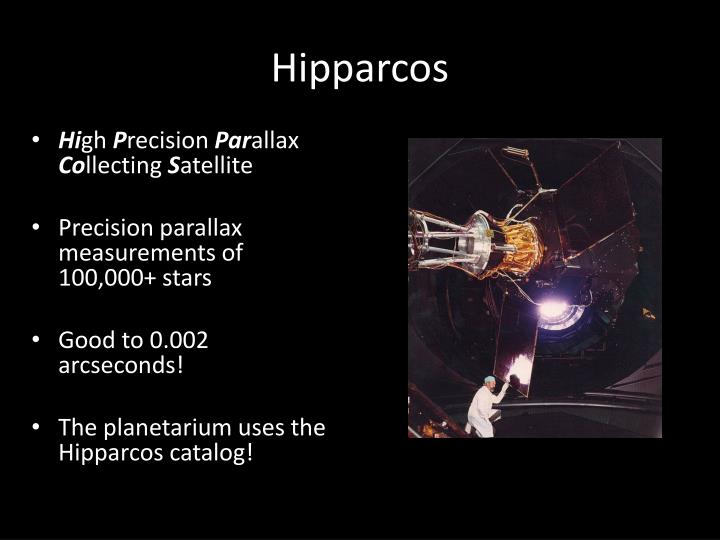
PPT Parallax and Proper Motion PowerPoint Presentation ID2678719

rohk/hipparcoscatalog at main
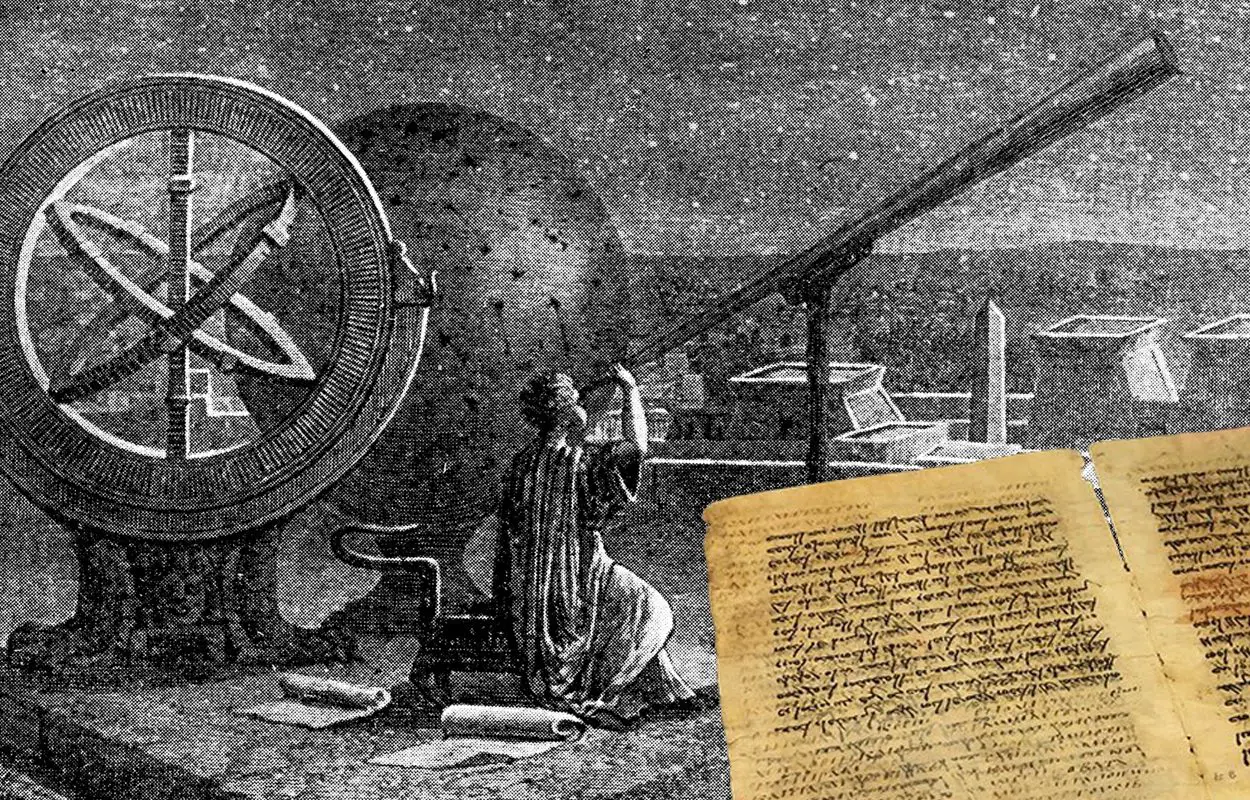
Researchers discover lost fragments of the Hipparchus Star Catalogue

(PDF) The Hipparcos Catalogue

The Hipparcos and Tycho Catalogues. 17 volume set

(PDF) The Hipparcos catalog

HR Digram of a stars from Hipparcos catalog. Colored stars are those

An observational HertzsprungRussell diagram with 22,000 stars plotted

The Hipparcos input catalogue (ESA SP) unknown author 9780929092126
The Brightest Stars in The Hipparcos Catalogue PDF
The Satellite, Which Operated For Four Years, Returned High.
Enter A Specific Hipparcos (Or Hd) Or Tycho Catalogue Identifer To Retrieve Data With Field Descriptions Plus Access To Light Curves, Double And Multiple Systems Annex And Variability.
Don't Know The Hip Number For Your Favorite Star?
The Satellite, Which Operated For Four Years,.
Related Post:
